
- By oaanews
- September 3, 2026
- 0 Comments
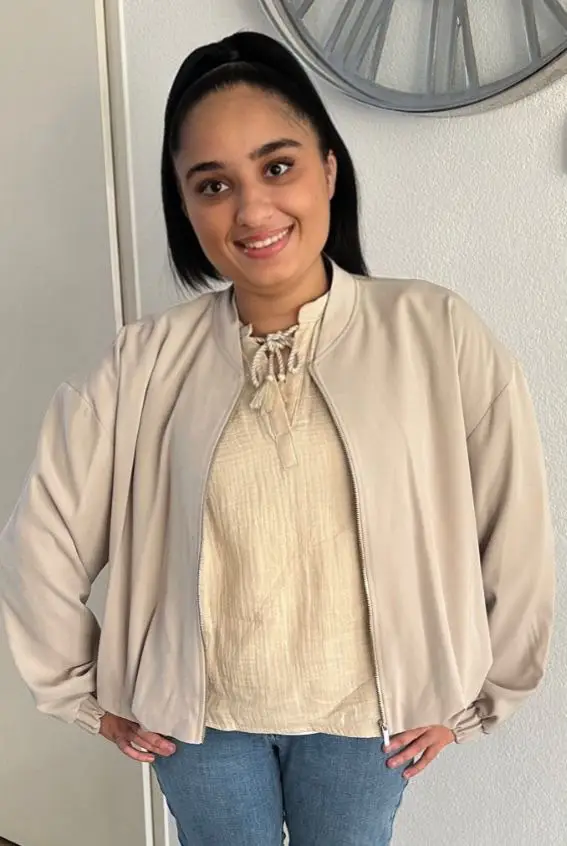
Sannae, Methylmalonic Acidemia, (MMA Mut 0)
“I was only just born when my parents started to feel that something wasn’t right with my health,” Sannae says. “I had trouble eating and was weak and lethargic. I also looked very pale. A blood test soon revealed that I had MMA, meaning that I have an inherited metabolic disorder—a disease that neither we nor anyone around us had ever heard of. My parents were told that I would probably only live to be four years old. The disease is extremely rare; as far as I know, fewer than five children are born with it in the Netherlands each year. When I was born, MMA was not yet included in the newborn heel-prick screening program.
Throughout my childhood, the MMA regularly caused me to become seriously ill, and I was frequently admitted to the hospital. I particularly struggled with nausea, vomiting, and extreme lethargy. At one point, I was given tube feeding because eating had become such a huge struggle.
I live in the Netherlands, but In 2016, I traveled to the United States for a second opinion at the National Institutes of Health (NIH). There, Dr. Irini Manoli told us that I needed to undergo a liver transplant to prevent further damage. The MMA mainly affected my liver, which in turn caused damage to my kidneys. Eventually, they were functioning at only five percent.
When I was eighteen, I decided that I wanted to undergo both a liver and kidney transplant at Erasmus MC hospital in Rotterdam, Netherlands. The aim was to prevent further damage to other organs as well. It would have to be a combined transplant, in which I would receive a kidney and a liver from a deceased donor at the same time. My own kidneys would remain in my body.
If you choose to undergo such an operation—and it is by no means an easy decision—you don’t end up on the operating table the same week. First, you undergo a full medical screening, which involves a whole week of various tests and examinations. Then, once you receive the green light, you are placed on the waiting list, and you only get your turn when a suitable match becomes available. For me, that match came a year later. I was called at midnight and told to come to the hospital urgently. Luckily, I had my bag ready. I had packed it a long time ago in anticipation for this day but it was still incredibly nerve-racking. Having to say goodbye to my parents just before the operation was also a very difficult moment.
After the operation, I was told that everything had gone well, and I noticed almost immediately that I was no longer feeling nauseous. But only a few hours later, it became clear that the donor kidney had been rejected because there was a blood clot in it. The kidney had to be removed immediately, and I was taken straight back to the operating room. After that, I suffered two more acute bleeds, and in total I underwent four operations in one week.
Eventually, I was allowed to go home. It turned out that my own kidneys, which had remained in place, had stabilized thanks to the healthy liver, and they are actually functioning quite well now. My MMA levels had even decreased by 90%. Unfortunately though, my problems were not over once I got home. Even with my decreased MMA levels I experienced severe side effects from the medication I had to take to prevent rejection of my new liver. I had a very strong allergic reaction and developed epileptic seizures that were difficult to control. Fortunately, it was possible to switch to a different medication, and I have been doing very well ever since. I haven’t had any more epileptic seizures. As a precaution, I continued taking anti-epileptic medication for a while, but I have since stopped taking it.
Most of the symptoms of my MMA have disappeared. I no longer feel nauseous and I have a muchlarger appetite. I can basically eat anything. I have more energy and sometimes go for walks to keep my fitness levels up. Because of the MMA, my immune system is still somewhat weaker. If I develop a fever, I have to go to the hospital so that my liver can be monitored. But other than that, I can get on with my life perfectly well.
Despite everything I have been through, I have always remained positive! I always look ahead. These days, I share my story and experiences on Instagram. I want to help other people through it because, as I always say: ‘I have a metabolic disorder, but I am not my disease.”
Sannae is an engaged advocate. She is an active speaker and has been involved in Rare Disease Day campaigns. She has also spoken at Erasmus MC, the hospoitl where she received her transplant, at a VKS (Association for Children with a Metabolic Disease) meeting.
If you are interested in continuing to follow her journey, you can follow her on Instagram at @sannae_.official