
- By oaanews
- August 26, 2026
- 0 Comments
Insurance coverage can fall short, but help is available.

Recap from today’s NORD webinar on insurance coverage of medical foods and nutrition, plus an update on OAA’s Patient Assistance Program
For families managing MMA, PA, CblC deficiency, GA-1, and other organic acidemias, medical formula isn’t optional: it’s the treatment. Today’s NORD webinar on insurance coverage of medical nutrition was a reminder of how far coverage still has to go, and why OAA’s own Patient Assistance Program exists to help fill the gap.
The State Report Card
NORD’s State Report Card grades every state on how well Medicaid and private insurance laws cover medical nutrition, based on how comprehensive coverage is and how many conditions are included. More coverage and fewer restrictions earn a better grade.
The results aren’t encouraging. Not a single state earns an A. Many states land in C territory, and West Virginia currently holds the country’s only F.
Medical nutrition coverage also lags behind states’ overall rare disease policy grades, in part because there’s no single, standard legal definition of “medical food” or “medical nutrition” that all states and insurers use. That gap is exactly what federal Medical Nutrition Equity legislation is designed to close.
Worth noting for families navigating their own coverage: state Medicaid programs almost never list specific organic acidemias by name. Most cover medical nutrition under broad categorical language, such as “inborn errors of metabolism,” rather than naming MMA, PA, GA-1, or CblC deficiency individually. That can work in patients’ favor, but it also means coverage often comes down to how a caseworker or plan interprets that category.
How to Take Action
- Explore your state’s grade: NORD’s Medical Nutrition Policy page
- Tap into PPMNE Coalition resources, a library of advocacy tools and talking points.
- Share your story with OAA or NORD for use with legislators. Email info@oaanews.org or action@rarediseases.org
While Coverage Catches Up: OAA’s Patient Assistance Program
Until insurance coverage improves, many families are left covering the cost of formula and supplements out of pocket. That’s where OAA’s Patient Assistance Program comes in, helping cover copays and out-of-pocket costs for medical formulas and supplements. If you have any questions you can email OA@rarediseases.org
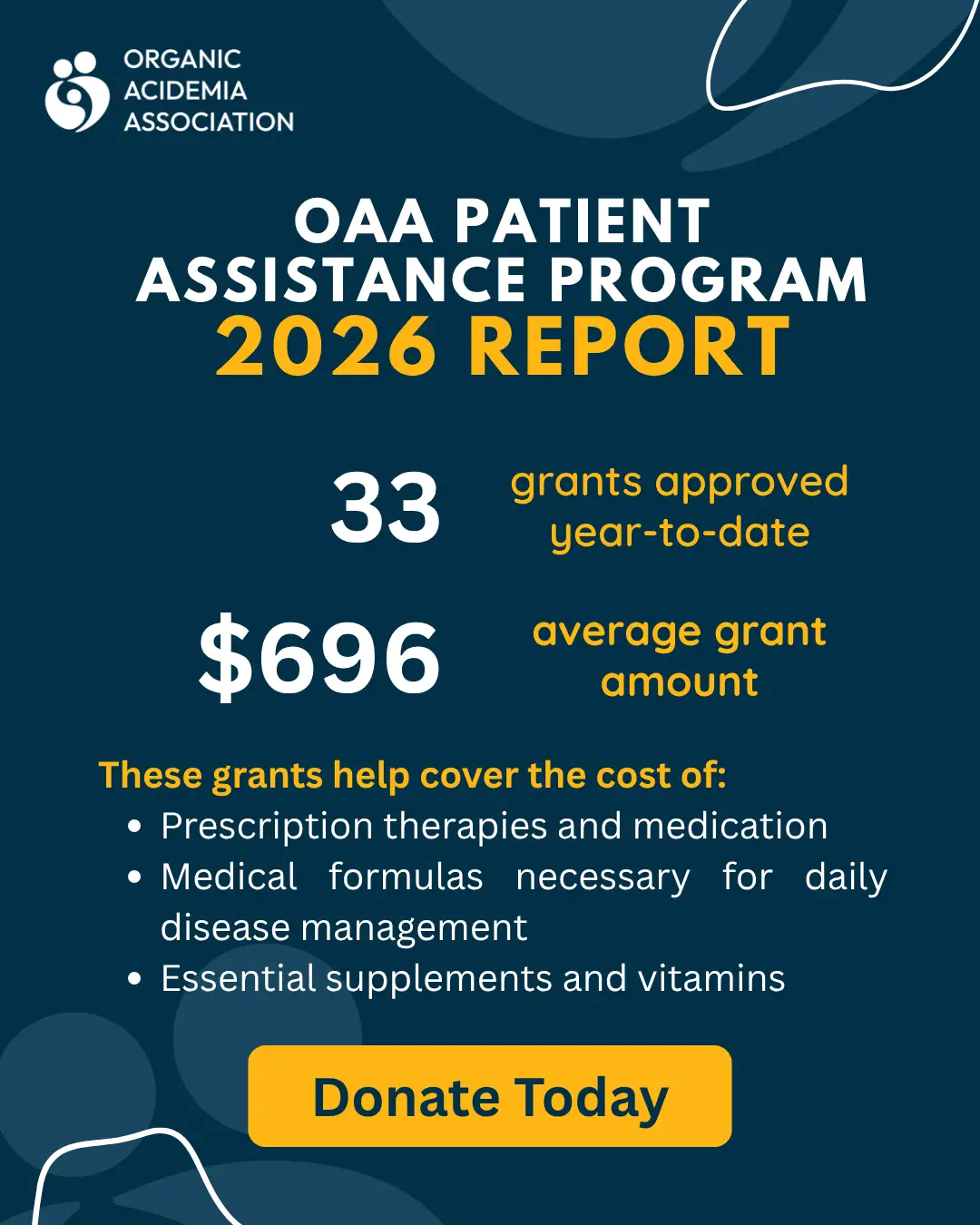
Our mid-2026 impact report shows what that support has meant so far this year, and over the life of the program:
- 26 grants approved to families this year
- Average grant amount is $696
"The medical formula and other treatment costs are not optional for our family. This assistance helped us continue providing what our child needs every day."
OA Patient Assistance Program Participant
If your family is facing formula or supplement costs that insurance isn’t covering, reach out to OAA to learn more about applying for assistance. And if you’re able to support the program, your contribution goes directly toward keeping these grants available for families who need them.
Bottom line: Medical formula and food aren’t a lifestyle choice for our families: they’re treatment. Whether it’s sending an action alert, sharing your story, or applying for or supporting the Patient Assistance Program, there are concrete ways to help close the gap between what patients need and what’s actually covered.