
- By oaanews
- November 13, 2026
- 0 Comments
Advocacy, Data, and Regulatory Momentum: Highlights from the 2026 NORD Breakthrough Summit

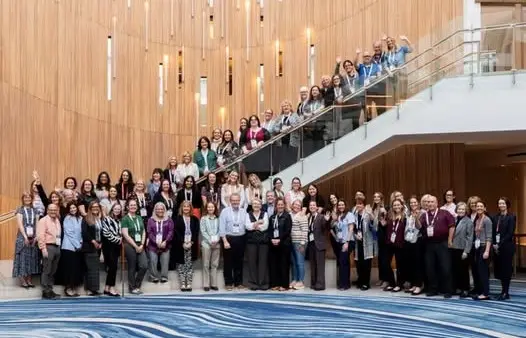
In late October, Research Program Manager Haley Stubbs, PhD represented the Organic Acidemia Association (OAA) in Washington, D.C., at the 2026 NORD Breakthrough Summit, as well as the pre-conference IAMRARE® Registry Meeting and the NORD Membership Meeting. Across three days of policy discussions, data workshops, and cross-sector panels, a clear theme emerged: while rare disease advocacy has secured historic visibility at the federal and industry levels, turning promising policy frameworks into real-world treatments for families will require sustained collaboration and high-quality patient data.
Turning Patient Registry Data into Action
Before the main summit kicked off, Haley joined fellow patient advocacy leaders at the pre-conference Registry Meeting. Sessions focused on best practices for analyzing and presenting registry data to tell a compelling, scientifically rigorous story. This is an essential skill when demonstrating disease burden and unmet medical needs to academic researchers, industry partners, and regulators.
Participants also met in small breakout groups to troubleshoot shared operational challenges in data collection across related conditions. For communities like OAA, where ultra-rare organic acidemias share overlapping metabolic pathways and clinical hurdles, collaborating with peer organizations helps refine how natural history studies capture longitudinal outcomes without overwhelming families.
Regulatory Shifts: The FDA’s New Rare Disease Framework
Regulatory modernization took center stage at both the NORD Membership Meeting and the main summit plenary sessions:
Comparing Community Petitions to Federal Policy: During the NORD Membership Meeting, representatives from the Haystack Project presented an analysis comparing their formal Citizen Petition for Rulemaking—which calls for a context-based evidence framework for rare diseases—against the FDA’s newly announced policies. Haystack emphasized that evaluating rare disease therapies should not rely on ad hoc exceptions, but rather on scientific rigor tailored to disease-specific realities such as small patient populations, phenotypic heterogeneity, and progressive clinical courses.
Highlights from the FDA’s Rare Disease Framework Initiative: Later in the conference, Acting FDA Commissioner Kyle Diamantas addressed attendees regarding the agency’s newly launched Rare Disease Framework Initiative (outlined in an October 2026 FDA white paper). Key pillars of the initiative include:
- A “Fit-for-Purpose” Evidentiary Standard: Moving away from rigid, one-size-fits-all clinical trial requirements toward predictable, consistent evaluation methods tailored to small populations.
- Innovative Trial Designs & Endpoints: Championing novel statistical approaches, external or historical controls (such as natural history registry data) when placebo arms are unethical or impractical, and clinically meaningful endpoints that reflect real-world disease progression.
- Continuous Patient Engagement & Risk-Based Manufacturing: Integrating patient perspectives on risk tolerance early in development—not just at final advisory meetings—alongside risk-based approaches to Chemistry, Manufacturing, and Controls (CMC) reviews so manufacturing hurdles do not stall promising therapies.
Cautious Optimism from Advocates: While NORD leadership, including president and CEO Pamela Gavin, and industry executives welcomed the FDA’s commitment to greater flexibility and transparency, many noted that the framework is only a starting point. As leaders echoed throughout the summit, the principles sound promising on paper, but the rare disease community will be watching closely to ensure consistent follow-through across FDA review divisions.
Expanding Newborn Screening and Industry Commitments
During a high-level CEO Leadership Dialogue on the next decade of rare disease innovation, BioMarin President and CEO Alexander Hardy highlighted the critical role of early diagnosis. Hardy shared BioMarin’s strategic goal to become significantly more involved in newborn screening advocacy over the next ten years, a vital commitment for genetic and metabolic conditions where early detection before symptom onset can dramatically alter long-term health outcomes.
Building Better Care Through Education and New Collaborations
In the session “Knowledge Changes Lives: Building Better Rare Disease Care,” speakers examined how educating the next generation of clinicians and researchers can shorten the diagnostic odyssey:
- Reaching Students Early: Dr. Reena Kartha, Associate Professor at the University of Minnesota, shared how she introduces undergraduate and college students to the realities of rare diseases in her coursework. By embedding rare disease education into the curriculum before students choose specialized medical or scientific career paths, her program fosters early clinical awareness and inspires future researchers to enter the rare disease field.
- NORD and Amgen Launch Learning Collaborative: During the same session, Byeong Yoon, Vice President of Medical, Rare Disease at Amgen, announced a major new Learning Collaborative in partnership with NORD. Leveraging NORD’s nationwide network of Rare Disease Centers of Excellence, the collaborative brings multidisciplinary medical teams together to share best practices, standardize diagnostic pathways, and tackle systemic delays in recognizing complex rare conditions. While the initial pilot focuses on specific rare autoimmune conditions (such as IgG4-related disease and thyroid eye disease), the initiative establishes a scalable model across NORD’s Centers of Excellence to accelerate time-to-diagnosis and improve coordinated specialist care for rare disease patients nationwide.
What This Means for the OAA Community
The takeaways from the 2026 NORD Breakthrough Summit reinforce why OAA’s investment in our IAMRARE® Patient Registry and community education is so vital. As the FDA looks more closely at natural history data and patient-reported risk tolerance to evaluate rare disease therapies, the experiences shared by OAA families directly strengthen the scientific foundation needed to bring safe, effective treatments to our community.